
Vietnam Visa on Arrival 2026: Guide, Fees & Requirements
Vietnam visa on arrival is a two-stage process: apply online for an approval letter before you fly, then collect your visa stamp at a Vietnamese airport. Available for air entry only. Processing takes 2-3 working days; same-day urgent service is available.
APPLY ONLINE
Vietnam visa on arrival is a two-stage process: you obtain an official approval letter before you fly, then collect your visa stamp at a Vietnamese international airport when you land. It covers single or multiple entry for up to 90 days and remains available in 2026 - but it applies to air travel only. Land border crossings and seaports do not accept this method.
This guide explains how the two stages work, which airports participate, what documents to bring, the full fee breakdown, and when it makes more sense to apply for the e-visa instead.
In brief:
| Topic | Details |
|---|---|
| Entry type | Air only (not land or sea) |
| Stage 1 | Apply online for approval letter before you fly |
| Approval letter processing | 2-3 working days (same-day urgent available) |
| Stage 2 | Pay stamping fee and collect visa at airport |
| Visa stamping fee | USD 25 (single entry) / USD 50 (multiple entry), cash only |
| Maximum stay | Up to 90 days |
| Valid airports | Hanoi, Ho Chi Minh City, Da Nang, Cam Ranh, Phu Quoc, and others |
What Is Visa on Arrival in Vietnam?
Visa on arrival in Vietnam is an entry visa issued at a Vietnamese international airport rather than through an embassy or by email. Unlike the e-visa, which you receive digitally before you travel, the visa on arrival requires you to complete the final step at the immigration counter when you land.
Two documents must be in your hands before you board: the pre-approved visa approval letter and two passport photos. Without the printed approval letter, airlines will refuse boarding on Vietnam-bound flights.
The visa on arrival is applicable to air travel only. If you plan to enter Vietnam by land from China, Laos, or Cambodia - or by sea via a cruise port - apply for the Vietnam e-visa or a visa sticker from the Vietnamese embassy in your country before you depart.
Who Is Eligible for Visa on Arrival?
Visa on arrival is available to citizens of most countries who are not on Vietnam's visa exemption list and who are traveling by air. Countries currently exempt from Vietnam's visa requirement - including Japan, South Korea, Singapore, France, Germany, the United Kingdom, and others - do not need any visa for stays within their permitted exemption period.
For nationalities that do require a visa - including citizens of Canada, India, Australia, most of South Asia, the Middle East, and Africa - visa on arrival is a valid option for air entry. However, most of these nationalities can also apply for the Vietnam e-visa online, which is cheaper overall and has no airport queue.
How to Apply for Vietnam Visa on Arrival: Step by Step
The process has two separate stages. Stage 1 happens before your flight; Stage 2 happens at the airport when you land. Both must be completed in order.
Stage 1 - Apply for the Approval Letter Online
You cannot apply for a visa on arrival approval letter directly through the Vietnamese government's public website. You submit your request through a licensed visa service agency such as Vietnamvisa.com, which handles the submission to Vietnam Immigration on your behalf.
- Go to Vietnamvisa.com and complete the online approval letter application form.
- Enter your passport details, intended entry date, exit date, and preferred entry airport.
- Pay the service fee by credit or debit card.
- Receive your approval letter by email within the stated processing window.
- Print the approval letter in color - the airline requires it at check-in.
Processing time options:
| Service | Delivery |
|---|---|
| Standard | 2-3 working days |
| Urgent | 4-8 hours (during business hours) |
| Emergency | 1-2 hours (Hanoi and Ho Chi Minh City flights only) |
Note: Urgent and emergency processing carry additional service fees. If your flight is within 24 hours, select emergency or urgent processing.
Stage 2 - Get the Visa Stamped at the Airport
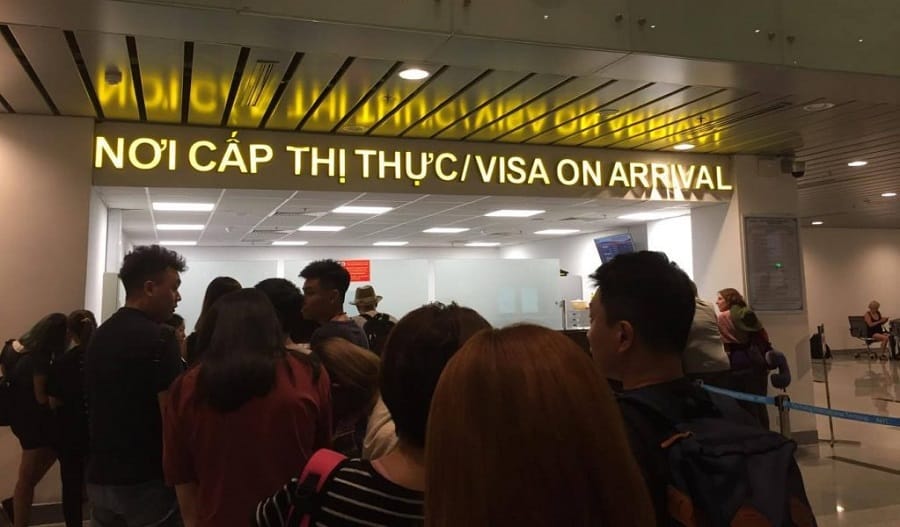
On arrival at your Vietnamese airport, bypass the general immigration queue and look for the visa on arrival counter. It is usually signposted separately near the immigration hall entrance.
Present the following documents:
- Your printed approval letter (color print; photos on a phone screen are not accepted).
- Your passport, valid for at least 6 months from your entry date into Vietnam.
- Two passport photos: 4x6cm, white background, no glasses.
- The visa stamping fee in USD cash: USD 25 for single entry, USD 50 for multiple entry.
- The visa application form NA1 (available at the counter if not completed in advance).
The immigration officer processes the stamp on the spot. At peak arrival times - especially in Hanoi and Ho Chi Minh City - the wait at the visa on arrival counter can reach 30-60 minutes. Prepare the exact cash amount; change is not reliably available at the counter.
Airports where visa on arrival is available:
- Hanoi (Noi Bai International Airport)
- Ho Chi Minh City (Tan Son Nhat International Airport)
- Da Nang International Airport
- Cam Ranh International Airport (Nha Trang)
- Phu Quoc International Airport
- Cat Bi International Airport (Hai Phong)
- Lien Khuong Airport (Da Lat)
- Can Tho International Airport
Visa on Arrival Requirements and Fees
Documents required:
- A passport valid for at least 6 months beyond your intended entry date.
- At least one blank page in your passport for the visa stamp.
- A printed color copy of your approval letter.
- Two passport photos: 4x6cm, white background, no glasses, taken within the last 6 months.
- The visa application form NA1 (obtainable at the airport counter).
- USD cash for the stamping fee.
Cost breakdown:
| Fee | Amount | When paid |
|---|---|---|
| Approval letter service fee | Varies by agency and speed | Paid online when applying |
| Visa stamping fee (single entry) | USD 25 | Paid in cash at airport |
| Visa stamping fee (multiple entry) | USD 50 | Paid in cash at airport |
The approval letter service fee is non-refundable once the letter is issued. The stamping fee is paid separately, directly to Vietnam Immigration at the airport. Bring USD cash - card payments are not accepted at the visa on arrival counter.
Visa on Arrival vs. E-Visa for Vietnam
Both the visa on arrival and the Vietnam e-visa allow up to 90 days of stay, in single or multiple entry. The differences are significant:
| Factor | Visa on arrival | E-visa |
|---|---|---|
| Entry route | Air only | Air, land, and sea |
| Total cost | Approval letter fee + USD 25-50 stamping fee | USD 25-50, no stamping fee |
| Airport queue on arrival | Yes - at the dedicated VOA counter | No - use regular immigration |
| Processing | 2-3 days standard, same-day urgent | 3-5 days standard, same-day via Vietnamvisa.com |
| Application | Through a visa agency | Online at evisa.gov.vn or via Vietnamvisa.com |
When Visa on Arrival Is the Right Choice
Visa on arrival is the right option in a narrow set of situations. Use it if your nationality is not eligible for the Vietnam e-visa, or if your e-visa application was rejected and your flight departs before you can reapply. Emergency approval letters are available for last-minute flights to Hanoi and Ho Chi Minh City within 1-2 hours.
For all other travelers, particularly those entering by land or sea, the e-visa is the lower-cost and faster option.
Apply for Urgent Vietnam E-Visa Through Vietnamvisa.com
Standard e-visa applications at the official government portal evisa.gov.vn take 3-5 working days. When you need a visa faster, Vietnamvisa.com offers urgent e-visa processing with approval in as little as 4 hours.
The e-visa covers all 83 ports of entry in Vietnam - every airport, all land border gates, and every seaport - with no airport stamping queue and no USD cash requirement. The official government e-visa costs USD 25 for single entry or USD 50 for multiple entry, the same as the stamping fee for visa on arrival but without the extra approval letter service fee on top.